Fertilization during the flowering season in agriculture

Fertilization during the flowering season in agriculture

Fertilization during the flowering season in agriculture

Flowering is a brief period, since most of the flowers wither very quickly. However, it is a fundamental process in agriculture. Since the processes of pollination, fertilization, seed formation and initial fruit growth occur in it, which will define to a significant extent the quantity and quality of the final harvest.

Flowering is essential, especially in certain crops such as fruit and horticultural crops. Since the main commercial value of these crops are the fruits.

During flowering the following stages usually happen:

– Possible elongation of the floral peduncle

– Opening of the corolla followed by the appearance of stamens and pistils

– Dehiscence of the anthers and dispersion of pollen

– Receptivity of the pistils with frequent appearance of stigmatic fluid

The time of flowering depends mainly on the species, being able to develop earlier or late depending on the cultivated variety. Normally it is carried out between the spring and autumn seasons. Being the so-called long-day plants those that bloom between spring and early summer and the short-day plants the ones that bloom in the autumn.

In this way, the flowering process is closely related to four main factors:

– Hormonal activity

– Environmental conditions (light and temperature)

– Water availability

– Balanced nutrition

Regarding nutrition, flowering crops need to keep constant the level of nitrogen, and receive phosphorus and potassium. But not in excessive amounts, since excess nutrients can lead to a nutritional imbalance, decreasing the positive effect.

It is also important to provide micronutrients such as boron that participates in pollination, flowering and seed production and is of great importance for the hormonal regulation of plants. As well as the Molybdenum, whose lack in the crop produces a reduction of the growth of the plant and the flowering.

In addition, this process requires a lot of energy mostly for the production of amino acids involved in reproduction.

In this sense, ADLER AGRO has developed a specific nutritive solution for this delicate and transcendental phase of the crop. FLOWER is a biostimulant based on amino acids and micronutrients that improves the nutritional state of the plant, stimulating physiological functions that occur at this moment of the cycle.

Its high content of complexed boron and molybdenum ensures an easy assimilation of these nutrients. Thus increasing viability of pollen, flower fertility and promoting fruit setting.

Thanks to its high content of amino acids, FLOWER allows the plant to overcome adverse weather conditions or stress that especially affect pollination and fruit, increasing the germinative power of the pollen grain and the elongation of the pollen tube.

The ADLER AGRO formula guarantees an increase of the flowering and the setting, and therefore its production.

Ripening – BRIX

Ripening – BRIX

Ripening – BRIX

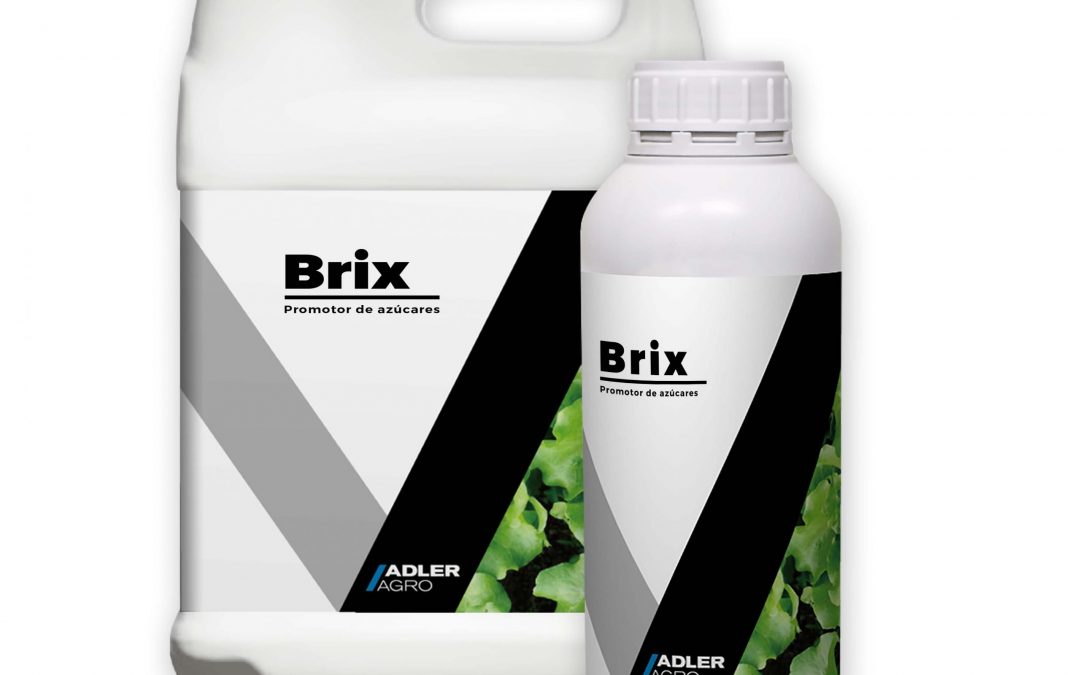
BRIX is a liquid biostimulant that contains en its formulation polysaccharides, Calcium, Magnesium and complexed microelements, which favour the creation and accumulation of sugar, improving the quality and ripening of the fruit.

Several trials performed by Adler Agro evidence the effectiveness of the product BRIX, both on the increasing of sugar in the fruits and on a higher uniformity and advanced ripening and harvesting.

On ripening season of many of our crops, Adler Agro recommends the application of BRIX for improving the harvesting quality.

Frost Defence: protection against frost

Frost Defence: protection against frost

Frost Defence: protection against frost

We are in times of frost in our latitude, and it is time to think about viable solutions to avoid as far as possible the damage they cause.

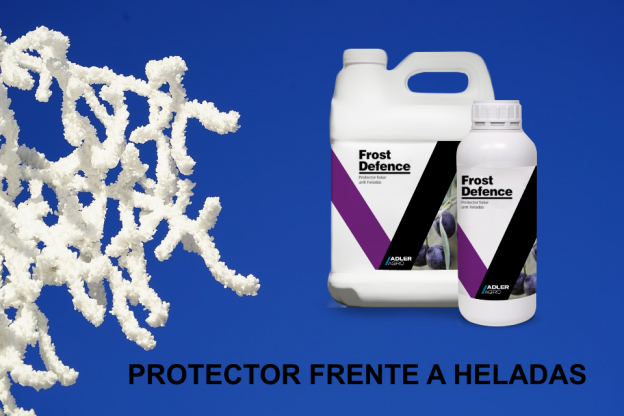
Frost Defense is a liquid product based on organic acids that covers the outer surface of plants, preventing the loss of water due to low temperatures and minimizing the damage caused by these adverse conditions.

FROST DEFENCE is indicated to protect our crops from radiation frost, and protects the plant (especially flowers and fruits) up to a temperature of -3ºC and for approximately 10 days.

It is advisable to apply FROST DEFENCE 24-48 hours before the frost forecast. The product is degraded without affecting the quality of the fruits and without harming the plant in any way.

Quelate, total efficiency

Quelate, total efficiency

Quelate, total efficiency

The existence of elements such as Iron, Zinc, Manganese or Copper in the earth crust is abundant. On the other hand, many of our crops show deficiencies of these and other elements. For example, Iron in one of the elements which can be found in higher levels in soil, with a 3.8% average. However, ferric chlorosis is one of our most common problems in the field.

There are several causes that explain why Iron is not available for plants:

– The biggest percentage of Iron found in soil is Fe+3. This form is the least assimilated by the roots.

– Furthermore, as the pH in the soil increases, this form precipitates being no longer available.

– Low temperatures, an excess of phosphorus and an excess of heavy metals also contribute to lower the availability of Iron.

Plants have to two strategies through which they are capable of increasing the availability of Iron in the soil solution:

– Monocots non-gramineous and dicotyls can lower the pH of the rhizosphere, so Fe+3 solubilizes and promotes the reduction to Fe+2, which is available for the plants.

– Gramineous plants excreet phytosiderophores which solubilize Fe+3 ions, forming a complex Fe- phytosiderophores.

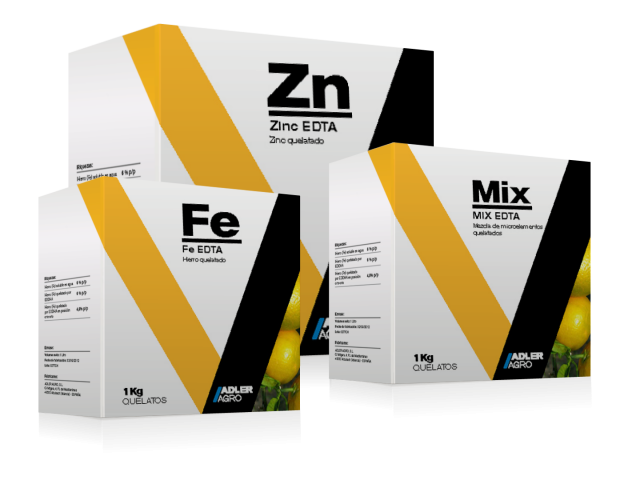
The use of chelates is the most efficient way of correcting ferric chlorosis and other nutritional deficiencies. Chelates are a chemical compound in which an organic molecule surrounds and links through different points to a metallic ion, protecting it from any exterior action, avoiding its hydrolysis and precipitation.

For explaining it in a simple way, a chelate is a substance which joins to Iron or any other metal, helping its easier absorption by the plant.

The mode of action of the chelate goes as follows:

a) It increases Iron solubilisation.

b) It transports Iron towards the roots of the plants.

c) It gives away Iron to the plant.

d) The organic part of the chelate goes back to the soil for solubilising more Iron.

In Adler Agro we have a wide range of chelates, in between them we can highlight Fe EDDHA 4.8 o-o. In between its characteristics, it stands out its high stability that keeps Iron available for the plants during a long time, correcting iron deficiencies in the crops.

For more information about our chelated products, do not hesitate to contact us.

New products

New products

Adler Agro, constantly innovating, releases three new products with which give efficient solutions to farmers.

Amino

Amino is a high-quality product, formulated with synthesis amino acids, and particularly suitable for helping the plant overcome stressful moments produced by external factors, such as droughts, frosts, etc.

Amino Start

Amino Start is a product based on amino acids with NPK. Its application improves the crops vegetative development, in particular extensive crops, cereals, oilseeds, etc., providing the crop with the essential nutrients needed for a correct development during its first stages up to blooming stage.

Amino Set

Is an other product specially formulated for extensive crops, cereals, oilseeds, etc., but in this case it improves grain or fruit fattening. It must be applied during setting and fattening stages of the seed.

With this three products, Adler Agro has a wide range of products with amino acids, embracing nutritional needs of the most representative crops.

Trials in rice

Trials in rice

Trials in rice

Rice cultivation at this time of year is ending the tillering period.

The tillering begins with the appearance of the bud located in the axilla of the first complete leaf, which will give rise to the first side shoot. New buds will appear from the upper leaves that will give rise to new side shoots. These (primary side shoots) will be able to sponsor again giving rise to secondary side shoots, and so on until the maximum tillering.

The tillering will be greater or less depending on the conditions of the crop. Low plant density, fertile soil, and suitable climatic conditions will favor tillering.

The rice growers, at this time of year, usually remove the water to carry out various jobs such as phytosanitary treatments (usually herbicides) or for manual weeding. At Adler Agro we are going to take advantage of this moment to carry out several trials in Cullera (Valencia) with two of our products that we have under development.

We are very hopeful that the trials will be a success, and that we can expand our catalog with products developed especially for cereals.