Trial in tomato crop

Trial in tomato crop

Trial in tomato crop

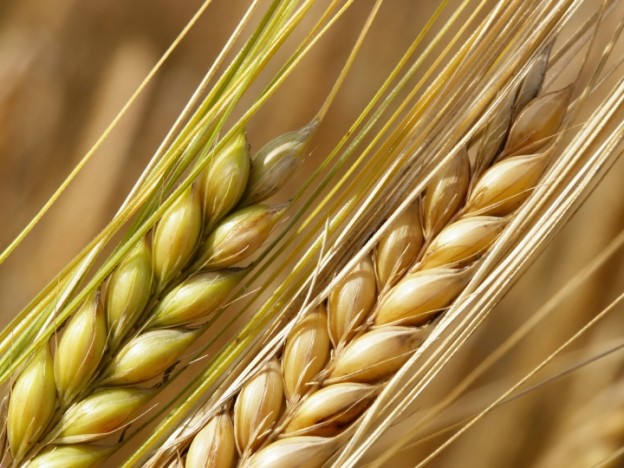
New tests carried out by Adler Agro demonstrate the efficacy of Brotostim and Root products in tomato cultivation. Specifically, in a trial conducted in a seed company, the height and weight of the plant were evaluated in trays treated with Root and Brotostim against other untreated trays. Our products increased the weight of the plant by more than 22% and the height of the plant by more than 37%.

Repilo del olivo

Repilo del olivo

El Repilo es una de las enfermedades en hongos más comunes y más importantes en el olivar. El principal síntoma de la enfermedad son las manchas circulares de color marrón en las hojas, acompañados de una defoliación, lo que debilita el cultivo y perjudica la producción.

Pero primero veamos con más detenimiento qué es el Repilo.

El hongo que causa esta enfermedad se llama Cycloconium oleaginum. Los periodos más frecuentes de infección de la enfermedad son en primavera y en otoño, ya que las condiciones más favorables para su propagación son la humedad y las temperaturas entre 8 y 24 ºC.

El ciclo evolutivo del Repilo se divide en cuatro fases:

Germinación: el hongo germina sobre la hoja con la presencia de agua libre y unas temperaturas en torno a los 20 ºC.

Infección: las primeras infecciones coinciden con el periodo de lluvias del final del verano o principios de otoño, momento en el que se desarrolla inicialmente la enfermedad.

Esporulación: aparecen en el exterior de las hojas las conidias que propagarán la enfermedad. Este es el momento en el que aparecerán las manchas típicas en las hojas.

Diseminación: las conidias se dispersan principalmente por la lluvia, aunque también pueden transportarse con el viento. Por ello, las épocas de mayor propagación de la enfermedad tienen lugar en primavera y en otoño.

El hongo sobrevive en los periodos desfavorables (verano e invierno) en las hojas caídas o en las que se mantienen en el árbol, donde puede mantenerse latente durante varios meses.

La prevención es el mejor método de control en la lucha contra el repilo. En los meses posteriores a la cosecha, es fundamental realizar una poda selectiva para favorecer la aireación.

Además, en zonas que favorezca la aparición de la enfermedad (como en zonas montañosas, cerca de ríos, zonas proclives a tener rocío, etc.), es aconsejable las aplicaciones con productos a base de oxicloruro de cobre u óxido cuproso principalmente.

En los casos en los que la enfermedad ya está presente, Adler Agro recomienda acompañar los tratamientos fitosanitarios con Biactive.

Biactive es un bioestimulante a base de extracto de algas y microelementos especialmente formulado para ayudar a superar situaciones adversas como periodos con falta de agua, ataques de patógenos, etc. Además, se puede mezclar con otros productos fitosanitarios.

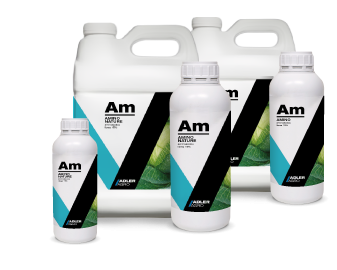
Amino acids. A fundamental tool in agriculture

Amino acids. A fundamental tool in agriculture

Amino acids. A fundamental tool in agriculture

Overview of amino acids

The amino acid is an organic molecule composed of carbon, hydrogen, oxygen and nitrogen. When a series of amino acids are joined by peptide bonds, the proteins are formed. Proteins are important macromolecules involved in all aspects of growth and development of plants.

Plants synthesize amino acids from the N absorbed as nitrate or ammonium that is in the soil. Clearly, the process of absorbing nitrogen from the soil is an important loss of energy for the plant. Therefore, the main reason why it is so important to applicate these products in agriculture is the energy savings that they achieve. This energy will be used in other processes such as sprouting, flowering or fruit set and fruit fattening, so that will increase the quality and the production of the crop.

Types

There are 20 types of amino acids that form proteins. There are certain types that are better for specific functions. Thus, the amino acids responsible for chlorophyll synthesis are Alanine, Arginine and Glycine. For the development of the root or to delay the senescence there are the Arginine and the Methionine. If we want to achieve a chelating effect on the soil and a better development of shoots and leaves we will use the Glycine. For the resistance systems of the plant the best types are the lysine, the glutamic acid and the glycine. Finally, for the synthesis of gibberellins we will use leucine and proline.

Aminograms, what they are and how they are interpreted

An aminogram is a schematic representation of the amino acid composition of a peptide or protein (or in our case of a fertilizer). A aminogram can be qualitative (if only appears the different types of amino acids that contains the product) or quantitative (if also appears the amount of each amino acid).

Fertilizer companies use this diagram to give information about the amino acid content of the products. In addition, we bring also the amount of free amino acids in our products. This data provides very important information about the product quality. In the hydrolysis (process by amino acids are obtained, and that will be discussed later) peptide bonds of proteins are broken, generating fractions of amino acids. These portions can be very heterogeneous, but only amino acids that are free can be absorbed by the plant, so this is one of the factors for evaluating the quality of a product.

Sources and methods of extraction

The main sources of amino acids are from vegetables, animals or synthetics. Amino acids of animal origin are usually produced from collagen and hair. Those obtained by plants, are extracted from vegetable waste of soybean, cereals, etc. The aminograms presented by these types of products depend on the type of plant material used. Finally, it is possible to design a product with synthetic amino acids, that is, to buy specific amino acids in the chemical industry and make a product with the amount of each you want. This method is much more expensive, but the resulting products are of high quality and have a faster effect.

In agriculture they are mainly two types to obtain the amino acids. Acid hydrolysis and enzymatic hydrolysis (or enzymatic fermentation).

Acid hydrolysis is the most rudimentary method and cheap. It consists in a prolonged boiling of the protein with acid solutions. This method is quite aggressive, so the resulting amino acid have low quality, due to there is a high percentage not free amino acids, and some are partially destroyed during the process. However, the improvement in manufacturing and the new techniques have managed to increase the quality of these products.

The enzymatic fermentation process is similar to the previous one, but much less aggressive. It is not necessary to increase a lot the temperature and instead of an acid solution, a certain enzyme is used (usually of bacterial or fungal origin). The process is more expensive and complex, but the percentage of free amino acids is much higher, so most of the composition of these products is usable by the plant.

Conclusions

The use of amino acids in agriculture is a tool that can be very useful to improve the production and the quality of the crop to overcome moments of stress due to low temperatures, droughts, etc., but it is necessary to have a knowledge of this type of products to buy the correct item for your crop.

In ADLER AGRO there is a variety of products with amino acids. It will be pleasure to answer the questions that can arise about which of our products is the best one in each case.

Microelements complexed with Amino Acids

Microelements complexed with Amino Acids

Microelements complexed with Amino Acids

Los cultivos sufren frecuentemente carencias en ciertos nutrientes como Ca, Fe, Zn y Mn, al estar poco disponibles debido al pH o tipo de suelo. Por tanto al realizar el programa nutricional del cultivo, se debe complementar la fertilización básica de NPK con un aporte de microelementos para asegurar que mantenemos los niveles óptimos de estos nutrientes y cubrir así todas las necesidades de las plantas.

También los aminoácidos potencian el crecimiento y ayudan a superar situaciones de estrés del cultivo gracias a su potente efecto bioestimulante. Además permiten que los nutrientes sean absorbidos rápida y eficazmente por las plantas.

Adler Agro completa su línea de aminoácidos con una nueva gama de micro y macroelementos complejados con aminoácidos vegetales para aplicación foliar, con el fin de prevenir y corregir deficiencias en todo tipo de cultivos, mejorando la absorción y traslocación, y ayudando así a la planta a superar cualquier tipo de carencia o estrés.

New packaging for Chelates

New packaging for Chelates

New packaging for Chelates

ADLER AGRO presents our new package for powder products, specially created for the chelates line.

This new design, apart from looking for an improvement of the image and the user comfort, it reflects the commitment of ADLER AGRO for optimizing the transport and reducing as far as possible the use of materials for packaging.

This way we offer more sustainable and competitive solutions to our customers without modifying the quality of our products.

BRIX efficacy trial in orange

BRIX efficacy trial in orange

BRIX efficacy trial in orange

BRIX is a special fertilizer that increase the sugar content of the fruit. BRIX is effective in crops such as melon, grapes, etc., in which the sugar content is important for subsequent commercialization. The product is also especially useful in early varieties, in which the sugar content could be lower. So, with the help of our product BRIX, we can increase the quality of the fruit.

Recently, the technical department of Adler Agro has successfully carried out new trials with BRIX in the cultivation of orange trees. The tests were carried out during the months of December and January in the municipality of Benaguasil (Valencia). These tests demonstrate the effectiveness of our product BRIX, which increases the sugar content in treated oranges.

For more information about the tests carried out by ADLER AGRO, contact our technical department.