

Improved fruit set, yield and fruit size in tomato: an agronomic trial
Improved fruit set, yield and fruit size in tomato: an agronomic trial
The Adler Agro strategy achieved the highest mean values in the trial for reproductive, yield and fruit-quality variables.
Tomato trial results: main effects observed
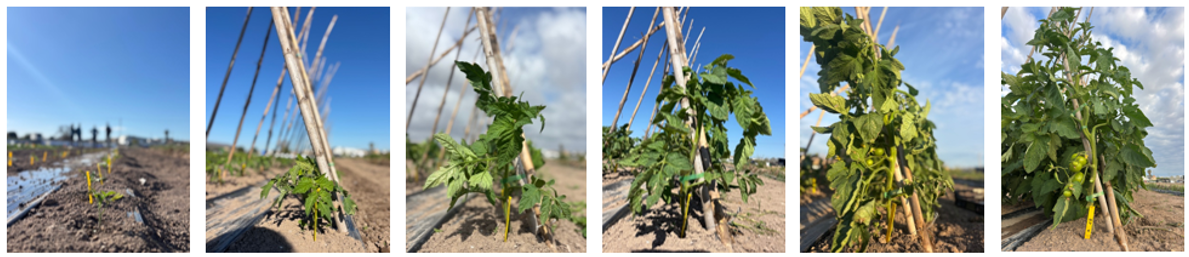
Figure 1. Development of the tomato plant over time.
Adler Agro has completed a field trial in Pedro DS-489 F1 tomato in Meliana, Valencia, during the 2026 season. The aim was to evaluate a biostimulant strategy based on Flower and Brix, comparing it with a commercial reference strategy and an untreated control receiving the standard crop management but not the specific biostimulants evaluated.
The tomato biostimulant trial results showed a favourable overall response of the Adler Agro strategy in reproductive efficiency, yield per plant, commercial fruit size and internal fruit quality.
Trial objective and design
The objective was to determine the effect of the Adler Agro strategy on flowering, fruit set, harvest, yield and tomato quality. The initial design included 24 plants per treatment under field conditions and a common agronomic management programme.
Treatments evaluated
- Adler Agro: combined application of Flower and Brix. Flower, formulated with boron, molybdenum and amino acids, was aimed at supporting flowering and fruit set; Brix, based on polysaccharides, calcium and magnesium, was intended to support fruit development and quality.
- Commercial reference: a strategy based on commercial products with functions equivalent to those of the Adler Agro solutions.
- Control: standard crop management without the specific biostimulants evaluated in the trial.
The products were assessed as a combined programme. Therefore, the results describe the overall performance of the Flower and Brix strategy and cannot assign the observed response independently to either product.
Variables assessed
- Flowering and fruit set: flowers per cluster, set fruit per cluster, fruit-set percentage and number of clusters per plant.
- Yield: set and harvested fruit per plant, harvested fruit as a proportion of flowers, and yield per plant.
- Fruit quality: mean weight, diameter, height, size and soluble-solids content expressed as °Brix.
Vegetative-growth variables were not included in the final analysis. Fruit-quality measurements were based on 100 fruit per treatment for weight and size and 25 fruit per treatment for °Brix.
Statistical analysis
Residual normality was checked using the Shapiro-Wilk test and homogeneity of variances using Levene’s test. When assumptions were met, a one-way ANOVA followed by Tukey’s test was used; otherwise, Kruskal-Wallis and pairwise Wilcoxon comparisons were applied. Differences were considered significant at p < 0.05. Different letters in the graphs indicate statistically significant differences.
Because some plants were lost during the crop cycle, yield per plant was interpreted descriptively using the final number of valid plants: 19 for Adler, 19 for the commercial reference and 22 for the control.

Figure 2. Layout of the agronomic trial.
Higher fruit-set and harvest efficiency
Figure 3. Tomato flowers.
The Adler strategy achieved 73.7% fruit set, compared with 72.3% for the commercial reference and 60.4% for the control. In relative terms, Adler produced 22.0% higher fruit set than the control; the absolute difference was 13.3 percentage points.
Harvested fruit as a proportion of flowers was also higher: 63.0% for Adler, 57.6% for the commercial reference and 44.9% for the control. This represents a 40.3% relative increase over the control and an absolute difference of 18.1 percentage points.
For both variables, Adler and the commercial reference were in the same statistical group, whereas the control showed significantly lower values. These findings indicate greater reproductive efficiency for the biostimulant strategies compared with the control management.
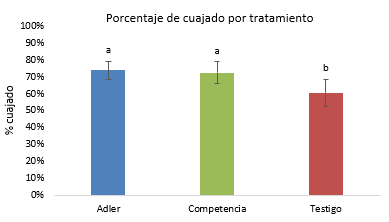
Figura 4. Efecto del tratamiento sobre el porcentaje medio de cuajado. Letras distintas indican diferencias significativas según Tukey (p < 0,05).
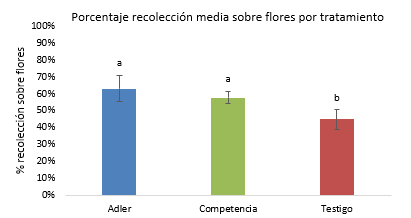
Figure 5. Mean flower foraging (%) by treatment. Different letters indicate significant differences according to Tukey's test (p < 0.05).
Higher yield per plant
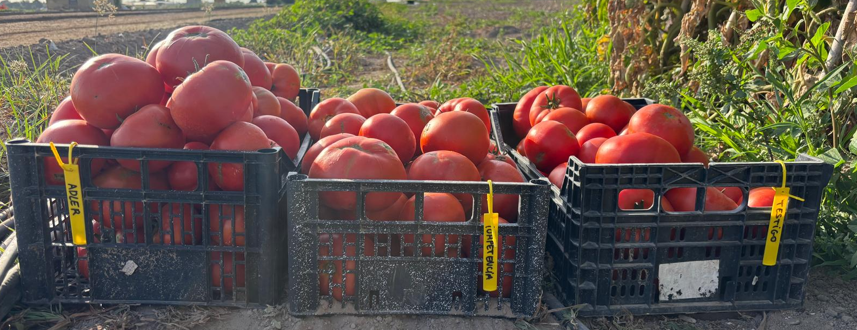
Figure 6. Crates after harvesting (June 29, 2026)
Adler produced the highest observed mean yield, at 3.80 kg per plant, compared with 3.36 kg per plant for the commercial reference and 2.87 kg per plant for the control. The increase was 13.1% over the reference and 32.4% over the control.
Mean fruit number followed the same trend: 12.2 fruit per plant for Adler, 11.1 for the commercial reference and 10.5 for the control. This corresponds to 9.9% more fruit than the reference and 16.2% more than the control
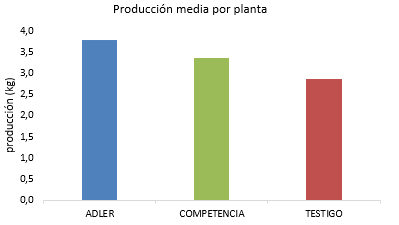
Figure 7. Average yield per plant (kg/plant)
Heavier fruit and larger commercial size
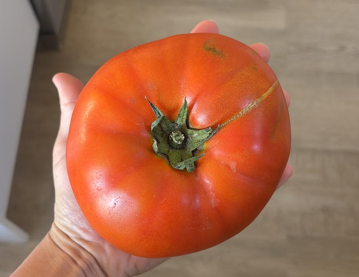
Figure 8. Tomato grown using the Adler Agro strategy.
The yield response was accompanied by larger fruit. Mean fruit weight was 330.9 g for Adler, 303.5 g for the commercial reference and 267.8 g for the control. Adler was 9.0% above the reference and 23.5% above the control. Adler and the commercial reference did not differ significantly from each other, but both were significantly higher than the control.
Mean fruit size reached 93.5 mm for Adler, compared with 87.8 mm for the reference and 83.0 mm for the control. Significant differences were detected among all three treatments, in the order Adler > commercial reference > control. Adler was 6.5% above the reference and 12.8% above the control.
The size distribution confirmed this pattern. Twenty-eight per cent of Adler fruit reached 100 mm or more, compared with 8% for the commercial reference and 7% for the control. Adler also concentrated a greater proportion of fruit in the higher weight classes.
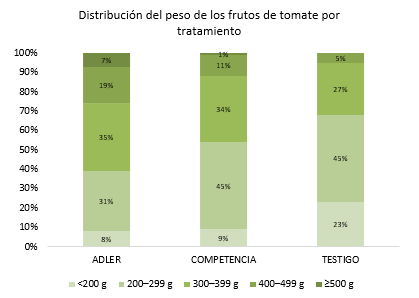
Figure 9. Percentage distribution of fruits by weight range according to treatment.
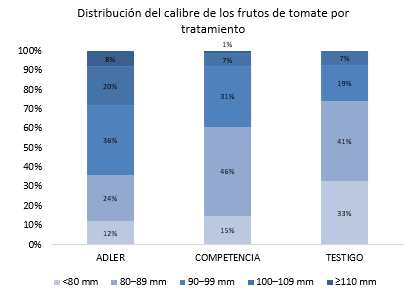
Figure 10. Percentage distribution of fruit size by treatment.
Higher internal quality and indications of earlier commercial maturity
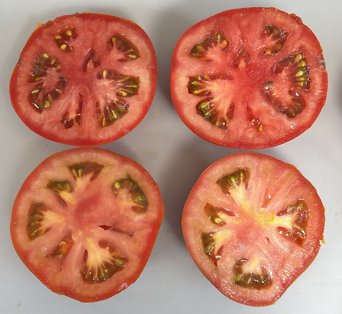
Figure 11. Comparison of different tomatoes. Top: Adler Agro treatment; Bottom: control treatment.
Mean soluble-solids content was 6.4 °Brix for Adler, 6.0 °Brix for the commercial reference and 6.3 °Brix for the control. Adler was 6.1% above the commercial reference and significantly higher than it. The control showed an intermediate value and did not differ significantly from either Adler or the reference.
At the first harvest, Adler fruit reached 6.63 °Brix, compared with 6.20 °Brix for the reference and 5.97 °Brix for the control. In addition, by 29 June, 56.5% of the final Adler harvest had already been collected, compared with 47.1% for the reference and 47.8% for the control.
The combination of higher °Brix from the first harvest and a larger proportion of production collected early in the harvest period is consistent with indications of earlier commercial maturity. This should be interpreted as an agronomic trend, as no specific maturity-rate or earliness test was performed.
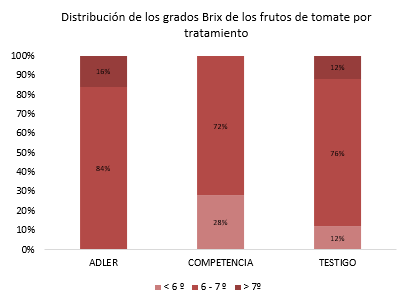
Figure 12. Percentage distribution of fruits by °Brix ranges according to treatment.
Agronomic interpretation
The trial showed a combined response across several stages of the crop cycle: improved fruit-set efficiency, a higher proportion of flowers reaching harvest, higher observed mean yield and improved fruit size and internal quality. This overall response is commercially relevant because crop value depends on the combined effect of fruit number, weight, size uniformity and maturity.
The agronomic functions of Flower and Brix are consistent with the observed trends. Flower is intended to support flowering and fruit set, whereas Brix targets fruit development and quality. However, because the products were applied as a combined strategy, the trial assessed the whole programme and did not isolate the individual contribution of either product.
Conclusions
Overall, the Adler Agro strategy showed the most favourable global performance in the trial. It stood out for higher fruit-set and harvest efficiency, the highest observed mean yield and fruit number per plant, greater fruit weight and size, a higher proportion of fruit in the upper commercial classes and the highest mean °Brix value.
The results support the value of an integrated biostimulant strategy targeting both the reproductive phase and fruit development and quality. Under the conditions of this trial, the Flower and Brix combination delivered a balanced response from fruit set through to harvest.
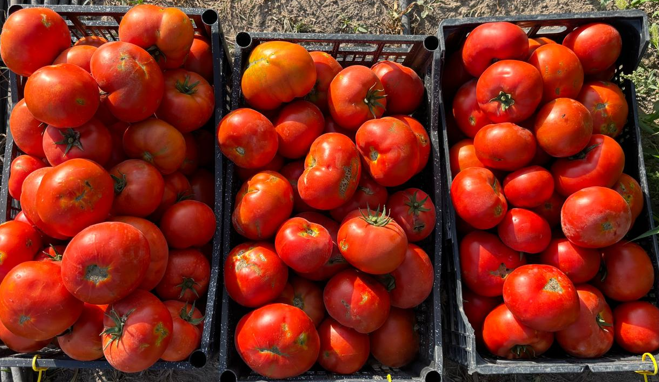
Figure 13. Crates after harvesting (June 29, 2026)
This article is also available in PDF format to facilitate consultation, downloading, and dissemination.
Recent Comments